For the glass sector, and for those involved in the entire glass processing chain, 2025 was a year of consolidation. Many of the trajectories started in previous years (such as digitization, automation, focus on energy efficiency and sustainability) found a more concrete form and actual growth. Thus, 2025, for those in the glass industry, represented a key step in which experimentation turned into real integration within production lines.
Let's see together the cult moments and events of 2025 for the glass industry!
Glass industry fairs 2025. Glass Build America, Vitrum and many more!
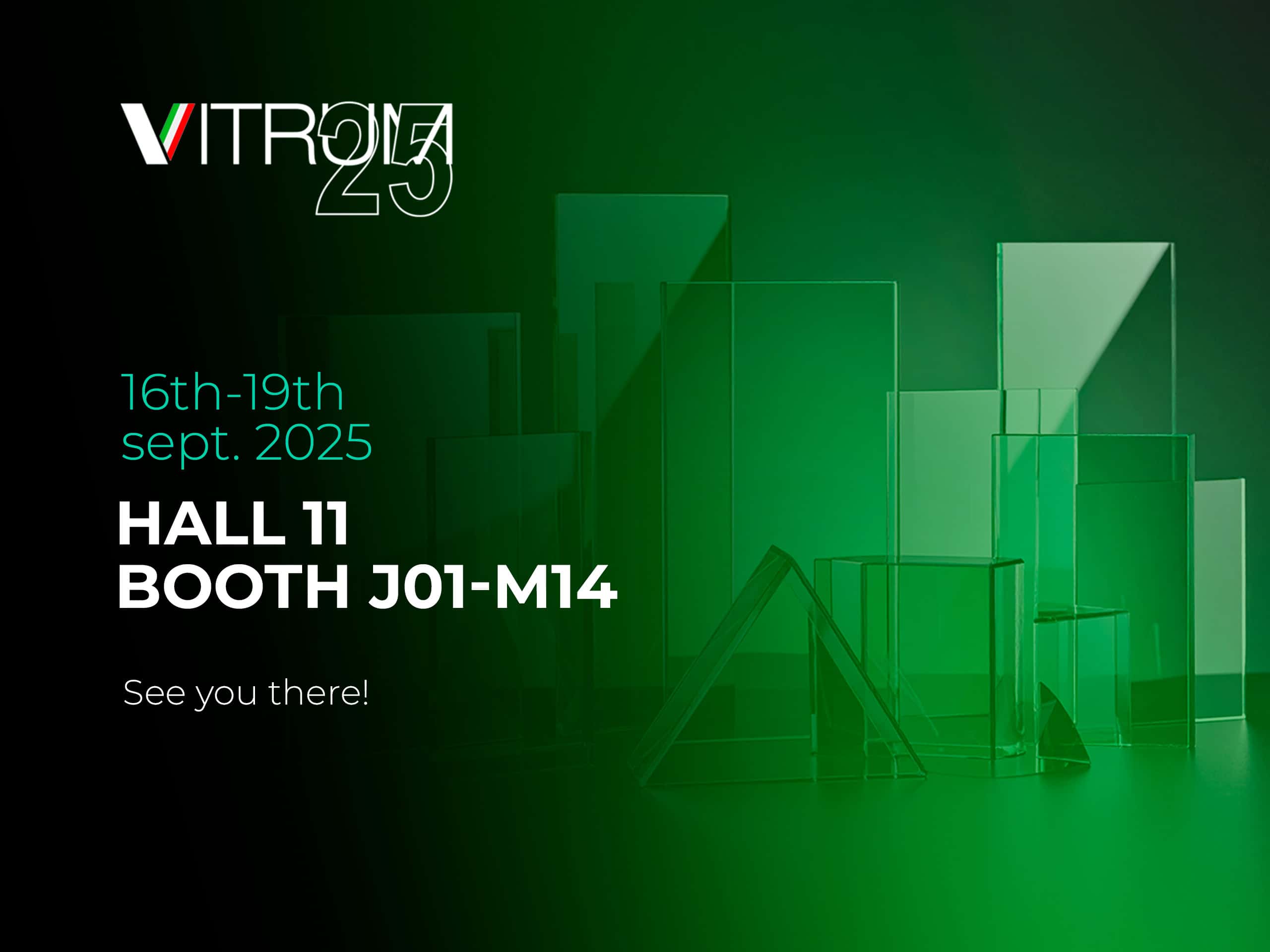
In 2025, the major industry trade shows confirmed a change that was already taking place, namely an increased focus on the robustness of industrial glass processing solutions. In particular, there were two main events: Vitrum e Glass Build America; both highlighted an increasing demand for glass processing machines capable of ensuring production continuity, repeatability of results and reduced operating costs.
Latin markets have also shown the same trend, and manifestations such as Glasstech Mexico 2025 e Glass South America 2025, exclusive meeting points for global exhibitors and Latin American buyers where the latest technological innovations related to the glass and construction sector emerged and-most importantly-where customized answers were given based on the specific needs of the Latin American market.
Lattuada's participation in these events was aimed not only at presenting solutions, but above all at engaging in dialogue with an industry that demands concrete answers: reliability, consistent grinding quality, ease of integration into existing lines, and guaranteed long-term results. Themes that, as we had the opportunity to test directly in the field, emerged in 2025 at all latitudes, regardless of geographic area and individual realities.
Automation in glass processing: innovation and technology for industries 4.0
One of the most obvious trends that has resonated in 2025 concerns automation. More and more glass factories, even small ones, have been able to approach the topic of automation and integration of their lines with advanced monitoring and sensor systems, thus succeeding in stabilizing the glass grinding and polishing process and reducing dependence on external variables.
We were among the first to support the idea that automation, in the glass grinding machine industry, should not replace the operator but support him in his daily activities and minimize the possibility of error. Thanks to more intuitive interfaces, faster set-ups and increasingly precise process controls, glassworks can maintain high quality standards on both large volumes and small to medium batches, being as versatile as they are precise and on time.
Energy efficiency and durability, a strategic combination in the glass industry
Sustainability, environmental impact and green production are increasingly on the agenda. In 2025 in the glass industry, there is a growing awareness that energy efficiency cannot be separated from the durability of machines: the more the machine endures and performs over time, the less it becomes necessary to replace it and, therefore, the less waste and waste there is.
In addition to durability, the issue of “water management” was a topic of discussion. In fact, it emerged how process water management is a determining factor for modern glassworks, which is why the most advanced machines do not simply use fresh water for grinding and polishing, but integrate closed recirculation systems or dedicated centrifuges that make it possible to reduce waste and maintain a constant quality of the working fluid. A totally sustainability-oriented approach, resulting in lower water resource consumption and - consequently - lower environmental impact, without compromising machining precision.
At the same time, reducing energy consumption has emerged as a central goal. High-efficiency motors, intelligent load control systems and optimized processing cycles make it possible to contain the energy used for each sheet of glass processed. Energy efficiency must increasingly be seen as an integral part of industrial competitiveness, because it allows costs to be cut and production to be more sustainable in the medium to long term.
In 2025, and in industry appointments, it has become clear how sustainability and performance must always travel together. That's why choosing machines designed to last-with components that are easy to service, optimized use of water and energy, and integration with control and automation systems-means keeping up with the times and taking a leap into the future. Glassworks that have, for some time, adopted this approach can already see the benefits: Less waste, greater production continuity, cost reduction and controlled environmental impact.
For Lattuada, this mixture is the guide that has always guided us in the development of our glass processing machines. Each new machine, even when made custom, is always designed not only to maximize grinding quality, but also to ensure a balance between productivity, durability and resource responsibility.
The future of the glass industry: ready for 2026!
As we have been able to see, 2025 has highlighted that the glass sector has taken on an important awareness by showing itself globally ready to give concrete answers in terms of efficiency, quality and innovation. Glass processing companies are increasingly looking for partners who are ready to understand these aspects and present themselves not as mere suppliers of machines, but as real “sidekicks” together with whom they can achieve concrete results.
And this is precisely the goal we pursue every day in Lattuada!
We will continue to build our future day after day, made of glass processing machinery designed to drop into production realities around the world, responding to the daily needs of production and guiding companies toward constant and increasing automation.