Glass grinding is the fundamental step that certifies the surface quality of the sheet. When we speak of grinding, we do not refer exclusively to the finishing of an edge or the preparation of the sheet for subsequent steps; in fact, the grinding process acts directly on the specific characteristics of the material, defining its roughness, flatness, and uniformity.
For any glass professional, it is clear how this step is indeed crucial in determining the quality of subsequent surface treatments. A correctly performed grinding in fact allows to obtain a surface ogene, free of residue and ready for processing such as satin finishing or polishing. On the contrary, inaccurate grinding results in variables that are difficult to manage or outright problems, which inevitably affect the final quality of the surface treatment.
It is on this principle that we have developed our glass grinding machines!
Our range encompasses machines designed to guarantee precision and continuity, thereby offering a stable foundation upon which to build every subsequent phase of the process.
How does the quality of glass grinding influence the surface frosting?
When moving to the glass frosting phase, the quality of the surface achieved during grinding becomes immediately apparent. The satin finish it is in fact one of the most sensitive treatments: any deformity or inhomogeneity of the glass surface translates directly into visual defects, irregular opacity or areas with different coatings.
Before the satin-finishing phase, it is therefore essential to calibrate the grinding wheel pressure in order to anticipate the behavior of the material in the subsequent phase, thus ensuring a uniform and consistent aesthetic effect. This aspect is particularly relevant in applications where satin-finished glass is chosen as a design element – architectural facades, furniture components – where visual rendering is undoubtedly the determining factor. If different sheets destined for a glass satin-finishing process pass through your glassworks, remember to maintain constant and controlled parameters during the grinding phase in order to always obtain suitable surfaces and reduce the need for corrective interventions.
Glass polishing and mirror finish: the influence of grinding
The process of glass polishing it is one of the most feared by glassmakers all over the world, as well as one of the most complex in the glass manufacturing process, especially when the ultimate goal is to obtain a perfect mirror polish!
La Mirror finish in fact, it irreversibly highlights any residual imperfection, including those left by improper grinding. A well-ground surface helps reduce polishing time, improves tool efficiency, and achieves a uniform gloss; conversely, a suboptimally ground surface requires intensive corrective work, with a direct impact on costs, time, and the final quality of the product.
So how should we act? By deploying an advanced technological approach!
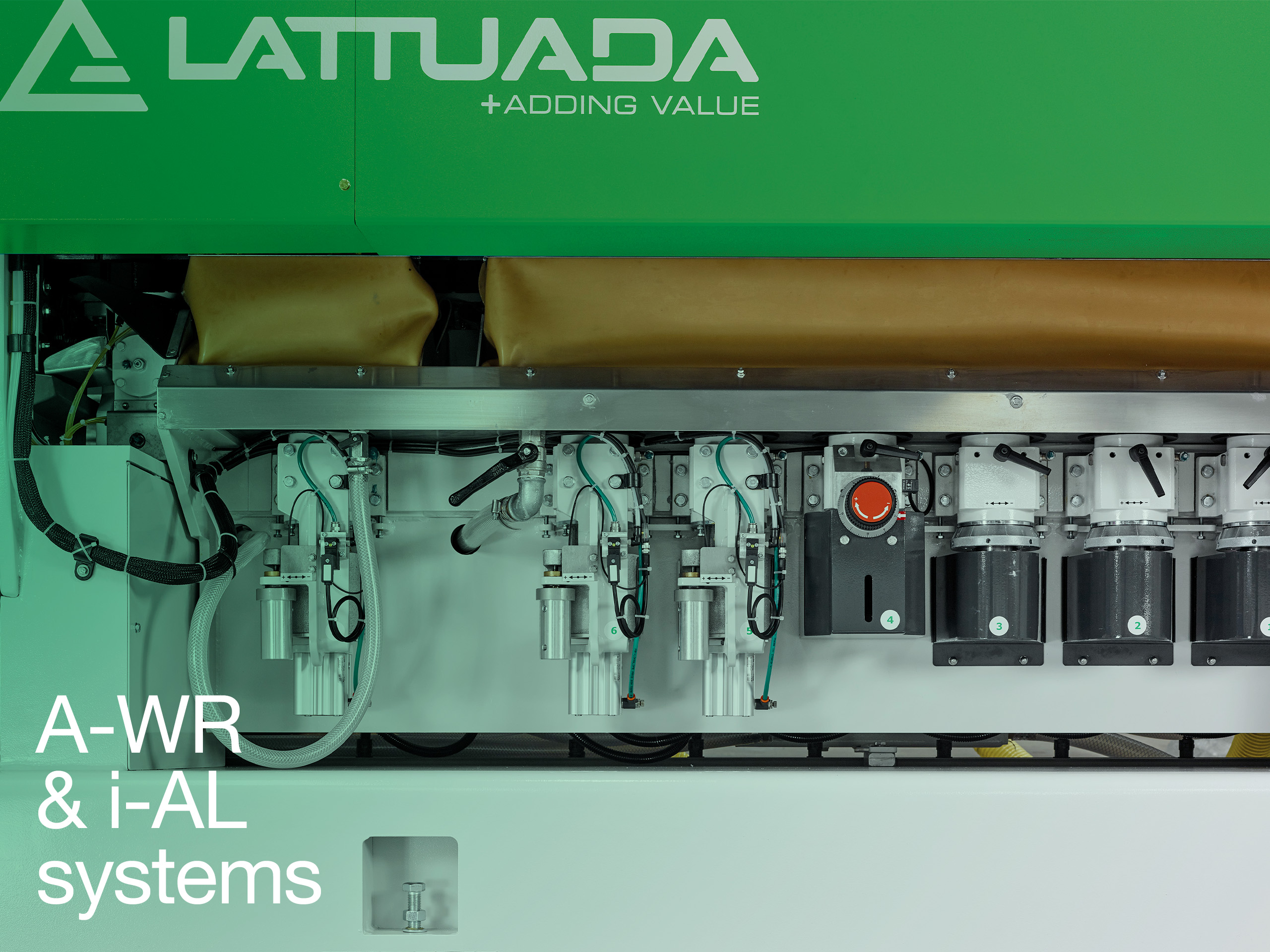
With Lattuada edging machines and our automation solutions, you can control every single variable of the grinding process, thereby obtaining an ideal base for polishing and guaranteeing the highest level of functional and aesthetic results.
Lattuada glass grinding machines: precision and continuity for advanced surface treatments
Stability, precision, and control of operating parameters are fundamental elements to ensure consistent and repeatable results in post-grinding surface treatments.
Our solutions are designed precisely for this goal: to offer industry professionals reliable tools capable of maintaining high quality standards even in conditions of intensive production or glass sheets with variable geometric shapes. This means being able to count on a solid foundation to confidently tackle all subsequent phases.
As we like to say, the difference is in the details. And the difference between a good result and an excellent result often lies in the initial stage, that of glass sheet grinding! In fact, it is during this delicate moment that the conditions for all subsequent treatments and their success are defined.
In Lattuada, the Glass edging machine design stems precisely from the awareness of how central this process is for all glass professionals; for this reason, our goal has always been to guarantee precision, stability, and control to enhance every single sheet of glass and optimize every subsequent processing step.