Lubrication systems for edging machines: tradition and innovation
La glass grinding represents one of the key steps in the glassworks processing cycle, a delicate process that requires a perfect combination of precision, efficiency and production continuity. One of the key factors influencing the quality of the end result and the durability of the machines used is the lubrication, an element that is often overlooked but plays a crucial role in the daily operation of a production line.
In recent years, technology applied to lubrication systems has advanced considerably, offering solutions that not only improve machine efficiency, but also increase component longevity and reduce component maintenance and replacement costs.
Lubrication: key element in flat glass grinding
Grinding machines are subject to considerable wear and tear due to the friction generated during the machining process. The strength of the grinding wheels, the quality of the glass surface and the structural integrity of the machine depend largely on the efficiency of the lubrication system. Improper or totally absent lubrication can lead to rapid component wear, machine overheating, and uneven glass finish, thus compromising the quality of the final result.
Le diamond and abrasive grinding wheels, the most commonly used, operate at very high speeds, generating friction that can lead to thermal deformation and reduce the quality of the cut or finish. This is where lubrication comes in, which is responsible not only for cooling the grinding wheels but also for reducing friction between the mechanical components and the glass, facilitating continuous and uninterrupted machining.
Types of lubrication systems
There are different types of lubricants and Lubrication systems used in glass grinding. These can vary depending on the type of machine, specific process, and production needs. The main categories include:
- Full oil lubrication (full oil lubrication): is the traditional choice for many applications where high cooling capacity and excellent wear protection are required. Integral oil lubrication systems offer a good balance between cooling and lubrication, but have disadvantages in terms of lubricant dispersion and glass contamination.
- Lubrication with water-oil emulsions: the use of emulsions has become increasingly popular in recent years due to their ability to cool effectively and lower viscosity than pure oil, which allows for more even dispersion. Emulsions reduce the formation of abrasive residues and are more environmentally friendly.
- Oil mist lubrication (oil mist lubrication): one of the latest and most advanced systems, which uses tiny airborne oil particles to create capillary lubrication in hard-to-reach parts. This system allows for a dramatic reduction in oil consumption and a very even distribution of the lubricant.
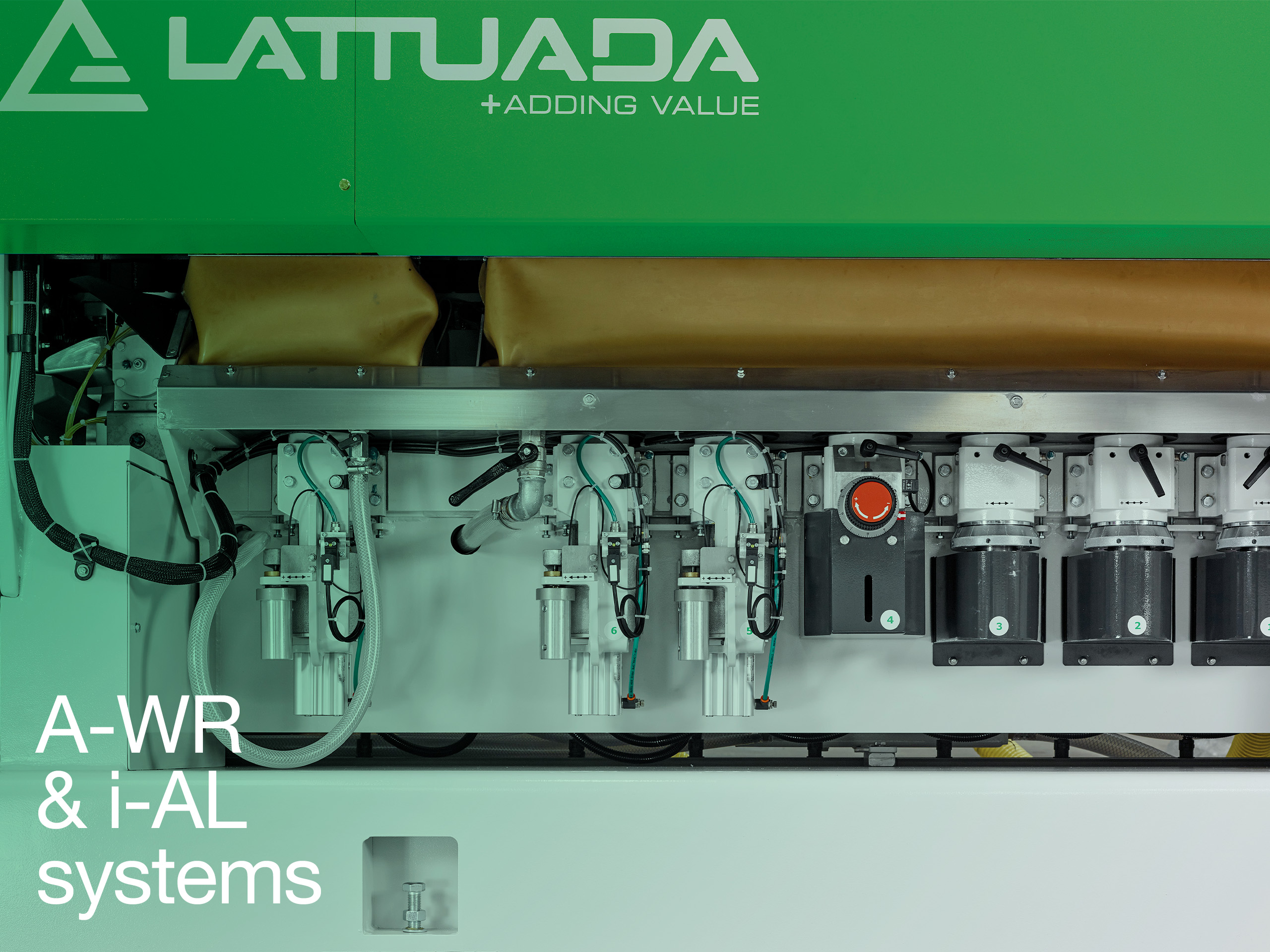
- Centralized and automated lubrication systems: One of the areas where the greatest advances have occurred is in lubrication automation. Centralized systems constantly monitor lubricant levels and distribute it automatically to the parts of the machine that need it, eliminating the need for manual intervention and minimizing the risk of human error. In Lattuada grinding machines, for example, lubrication of the guides is fully automatic thanks to a pneumatic pump and special metering valves.
Innovations in lubricants: the importance of composition
In addition to distribution systems, technological evolution has also touched the formulation of the lubricants themselves. I new high-performance lubricants include specific additives to reduce friction and increase resistance to high temperatures. Recent developments include:
- Synthetic lubricants: offer greater thermal resistance and longer life than conventional mineral-based lubricants. Synthetics are particularly suitable for applications where operating temperatures are high, such as in high-speed grinding machines.
- Wear-reducing additives: these advanced chemical components allow a protective film to form between moving surfaces, dramatically reducing friction and wear on grinding wheels and mechanical components.
- Environmentally friendly lubricants: with an increasing focus on sustainability, companies are developing biodegradable or environmentally friendly lubricants that can be used without the risk of contaminating the environment or finished products.
Innovations in lubrication systems are redefining the standards for efficiency and precision in glass grinding. The benefits go beyond simply reducing wear: they are an overall improvement in production, positively affecting the quality of the final product, machine life, and energy efficiency.
Lubrication is critical for proper machine operation: Remember to use only products recommended by us as they are the only ones that can guarantee the best performance, allowing the machine to work in optimal conditions.
Using products that are not equal or equivalent to those recommended may void the warranty.
Do you want to improve the overall performance of your glass edging machines?
Pay attention to lubrication, use only recommended products, choose Adelio Lattuada!